
Target Plus Marketplace: UPC and Barcode Requirements for New Sellers
Target Plus is one of the most attractive marketplaces in US e-commerce — and one of the hardest to get into. Unlike Amazon or Walmart, Target's third-party marketplace is invite-only, curated to feel like an extension of Target's own shelves. Lower competition, a high-trust storefront, and customers who convert.
But whether you're chasing an invite or you just received one, there's a foundation requirement you need squared away before your catalog goes anywhere near Target's item setup process: every product needs a valid UPC.
Here's exactly what Target Plus expects, how it compares to the other major marketplaces, and how to get your catalog ready — the right way, the first time.
Does Target Plus Require UPC Codes?
Yes. Target Plus requires a valid GTIN — for US sellers, that's the 12-digit UPC — for every item you list. Target's catalog is built around item-level identification, and their item setup process validates identifiers when your products are onboarded.
This shouldn't surprise anyone who has sold on the other big marketplaces: Walmart requires UPCs for every listing, and Amazon requires them unless you obtain an exemption. Target — a company whose entire brick-and-mortar operation runs on barcode scans — holds its online marketplace to the same standard. (New to identifiers? Start with GTIN vs. UPC explained.)
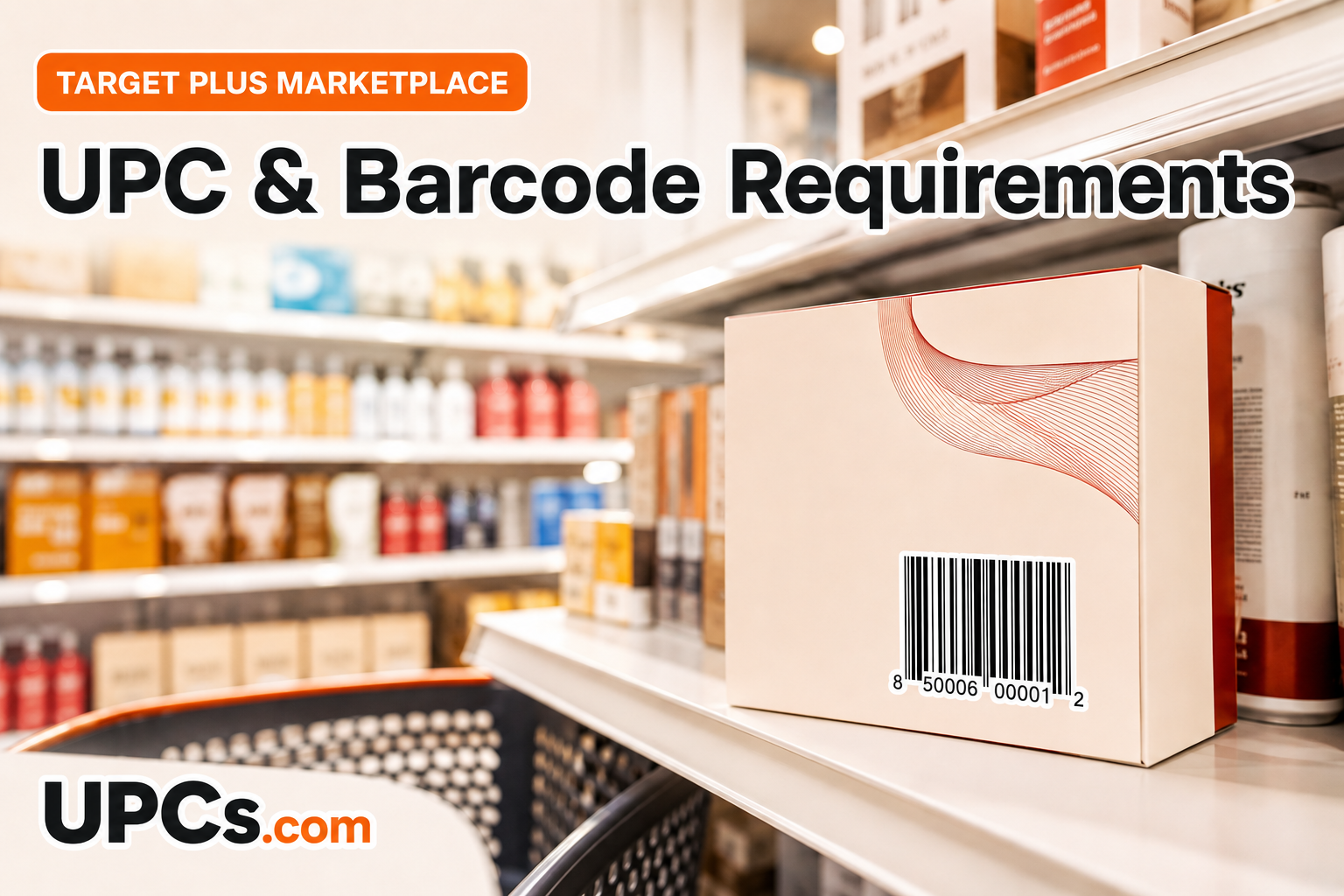 Every Target Plus listing is anchored to a valid GTIN/UPC in Target's item catalog.
How Target Plus Compares to Amazon and Walmart
| Requirement | Target Plus | Walmart Marketplace | Amazon |
|---|---|---|---|
| Entry | Invite-only | Application | Open registration |
| UPC/GTIN required | Yes, every item | Yes, every item | Yes (unless exempted) |
| Catalog style | Curated, brand-focused | Open catalog | Open catalog |
| Guides | This article | Walmart UPC guide | Amazon 2026 UPC guide |
The takeaway: one set of UPCs covers all three. A UPC identifies your product everywhere it's sold — so the codes you assign today for Target Plus are the same codes you'll use on Walmart, Amazon, TikTok Shop, and a physical Target shelf if your brand ever lands one.
Getting Your Catalog Target-Ready: Step by Step
-
1
Assign a UPC to Every Item and Variation
Target treats each size, color, and pack count as its own item, and each one needs its own unique UPC. Audit your full catalog first — it's cheaper and cleaner to buy your codes in one block than piecemeal. (Reference: Do I need a separate UPC for every product?)
You can buy authentic UPC codes at UPCs.com — delivered by email in minutes, owned forever, no annual renewals.
-
2
Keep Your Product Data Consistent Everywhere
Target's curation team looks at how your brand shows up across the web. Make sure the UPC you use for a product matches on your website, Amazon, and Walmart — mismatched identifiers across channels are the root cause of most marketplace catalog errors, like Walmart's UPC listing errors and Amazon's Error 8572.
-
3
Prepare Your Item Setup Data
When you onboard to Target Plus (directly or through an integration partner like a marketplace management platform), you'll submit item data including the GTIN/UPC, brand name, item dimensions, and images. Keep a master spreadsheet with one row per variation: SKU, UPC, title, and attributes. (SKU vs UPC confusion? Here's the difference.)
-
4
Barcode Your Physical Packaging
Target Plus is online-only today, but the brands that succeed there are the ones Target considers for in-store placement tomorrow. Retail-ready packaging with a properly sized, scannable barcode keeps that door open. (Guides: how to size and place barcodes and how to print barcode labels.)
How Do You Get Invited to Target Plus?
Target doesn't publish a formula, but sellers who receive invites tend to share a profile:
- A clean, established catalog on other marketplaces with strong ratings and complete item data (including valid GTINs)
- Products that fit Target's merchandising strategy — home, apparel, baby, beauty, toys, and adjacent categories
- Reliable fulfillment — fast shipping and low defect rates
- A real brand presence — a website, consistent product identity, and professional packaging
You can also apply for consideration through Target's seller interest form or get onboarded via Target Plus integration partners. Either way, the item-data foundation — UPCs included — needs to exist before anyone can say yes.
Frequently Asked Questions
Do Target Plus UPCs have to come from GS1?
Target's item setup validates that your GTIN is a legitimate, correctly formatted code. Legacy UPC codes — issued before 2002 and owned outright, like the ones we sell at UPCs.com — are authentic UPCs from the original UCC numbering system. Some large retail programs do run database matching against GS1's registry; if you hit a company-name mismatch question during onboarding, the fix is documentation, not a GS1 subscription. We provide a Certificate of Ownership with every order and a Letter of Affiliation on request. (Background: why a different company may appear in the GS1 database.)
Can I use the same UPCs on Target Plus and Amazon?
Yes — that's exactly how it's designed to work. One product, one UPC, every channel.
How many UPCs do I need?
One per unique sellable variation. Count every size/color/pack-count combination in your catalog. Volume pricing at UPCs.com makes it economical to code your whole line at once.
What about selling to Target's physical stores?
That's a separate path — becoming a Target vendor/supplier — with its own vendor onboarding requirements. But it starts from the same place: a barcoded, retail-ready product line. Get your UPCs assigned and your packaging scannable, and you're prepared for either door.
Get Your Catalog Target-Ready
Authentic UPC codes delivered to your inbox in minutes — one low price, owned forever, accepted across the major marketplaces.
Buy UPC Barcodes Now